The International Conference on HIV Treatment, Pathogenesis, and Prevention Research (INTEREST 2026) took place from 12–15 May 2026, in Dar es Salaam, Tanzania. Read reflections and key takeaways from AVAC's Grace Kumwenda and Access Bridge's Wawira Nyagah.
By Grace Kumwenda and Wawira Nyagah
INTEREST 2026 in Dar es Salaam, Tanzania, reminded us why this conference holds such an important place in the African HIV response. It is not just where new data are presented or where the next wave of scientific breakthroughs are discussed, but it is also where the promise of innovation is tested against the realities of implementation.
Across sessions, we heard about long-acting HIV prevention, HIV cure research, vaccine science, TB innovation, STIs, and comprehensive care for aging populations grounded in reality of the current context — clinics with stretched staff, communities still facing stigma, ministries of health navigating policy and financing pressures, and health systems being asked to deliver more with less.
For us, the strongest message from INTEREST 2026 was this: the HIV field is not short of innovation; however, products do not deliver themselves. The urgent question is whether countries, communities, funders, and health systems are ready to turn innovation into access and impact.
Opening Session: The State of HIV Prevention in Africa
Tanzania's hosting of INTEREST 2026 was an important milestone for regional and global collaboration. HIV remains a major public health challenge, and, while there has been real progress, persistent inequities and access gaps remind us that the work is far from finished, and countries, regions, and the global community must work together to advance the response.
Mahesh Swaminathan from CDC Tanzania shared progress toward the 95-95-95 targets in eastern and southern Africa, celebrating the progress of seven countries reaching the targets by the end of 2024. However, new HIV infections continue, especially among adolescent girls and young women and other sub-populations. Prosper Faustine Njau from Tanzania's Ministry of Health brought the discussion closer to the host country context, noting that Tanzania is currently at 83%-98%-94%, with a persistent gap in ensuring that people know their HIV status.
Catherine Madebe from the National Council of People Living with HIV in Tanzania, a member of AVAC's Clinical Trial Design Academy and a 2022 Fellow Alumna, reminded us why community leadership matters. During the opening session, she highlighted the essential role of communities in HIV programs and commended Tanzania's progress on social contracting — the process whereby governments use public funds to pay NGOs and civil society groups to deliver HIV prevention, testing, and care services — as one way to strengthen community-led responses and accountability.
Long-Acting Prevention Is Here; Now Comes the Hard Part
If CROI 2026 made it clear that the prevention pipeline is expanding, INTEREST 2026 underlined the tension between scientific promise and the delivery of services at scale. While science is moving fast, we were reminded that the lives we are trying to reach are complex, shaped by stigma, access, cost, interpersonal relationships, mobility, and mistrust in health systems and institutions.
Kenneth Ngure, former Dean of the School of Public Health at Jomo Kenyatta University and incoming president of the IAS, highlighted the realities of implementation as the field moves toward long-acting prevention. Oral PrEP has helped transform HIV prevention, but uptake and continuation are still affected by pill fatigue, stigma, limited awareness, side effects, social barriers, and the realities of daily life. Long-acting products, including the Dapivirine Vaginal Ring (DVR), injectable cabotegravir (CAB), injectable lenacapavir (LEN) and the anticipated monthly oral pill (MK 8527) may address some of these challenges, but only if they are affordable, available, well understood, and delivered through platforms people can actually use.
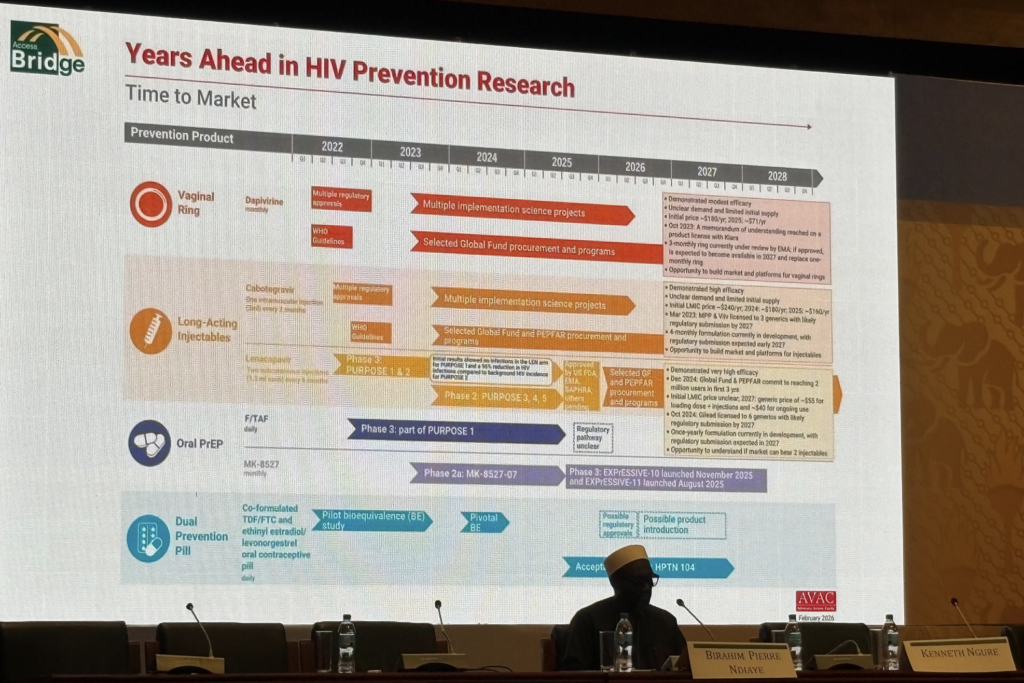
Francois Venter, Executive Director of Ezintsha at the University of the Witwatersrand in Johannesburg, summarized the current state of the HIV field saying, "The drugs are amazing — but delivery systems will determine whether they actually transform lives." We should be excited about new products, but we should be equally serious about the systems and platforms that must deliver them, as Venter notes, "Products do not deliver themselves." The future of PrEP may be long-acting, but its success will depend on whether we make choice in prevention real, accessible and equitable. (See also a recent commentary from our two organizations that describes what needs to happen next: The HIV prevention jab scientists hoped for is finally here. Now comes the hard part.)
Africa Is Leading the Science of HIV Cure and Vaccines
One of the most exciting moments at INTEREST 2026 was hearing about HIV cure research taking place in Africa. A major highlight was the encouraging safety findings from the first-in-Africa HIV cure trial, which includes vesatolimod, VRC07-523LS, and CAP256V2LS. Additionally, of the 20 participants, four (20%) achieved durable ART-free viral control, while eight (40%) experienced atypical viral rebound dynamics.
While the search for HIV cure remains complex, the field is moving from theory to clinical evidence, showing that durable viral control without antiretroviral therapy (ART) can occur in some individuals. Perhaps most importantly, it demonstrates that complex HIV cure trials can be conducted in African settings when there is strong community partnerships, ethical engagement, and multi-sector collaboration.
INTEREST also gave important space to HIV vaccine research. Vincent Muturi-Kioi from IAVI presented Translational HIV Vaccine Development and mRNA Technology, describing how discoveries can move from the laboratory into human trials more efficiently. The IAVI G001, G002, and G003 studies were discussed as important milestones, including evidence that African participants can mount immune responses comparable to those seen in US populations.
This momentum in cure and vaccine science reflects a broader shift toward African scientific leadership and self-reliance. ACHIEVE Africa is one example discussed at the conference: an African-led, African Union (AU) member-state championed initiative strengthening the continent's capacity for vaccine and biologics research, clinical trials, regulation, and manufacturing. By investing in African institutions, scientists, partnerships, and technology transfer, it seeks to close longstanding R&D and production gaps while advancing health security and local production, including the AU target of producing 60% of Africa's vaccines locally by 2040. Together, these efforts show that Africa is not only receiving innovation, but driving science, partnerships, and systems that will shape the future of global health.
HIV Does Not Exist in Isolation
A session on STIs led by Mitch Matoga, physician-scientist at the University of North Carolina (UNC) Project Malawi, reviewed emerging technologies in STI prevention, diagnosis, and treatment, including one-dose benzathine penicillin G, meningococcal B vaccines for gonorrhea prevention, new oral drugs for gonorrhea (zoliflidacin and gepotidacin) and Doxy-PEP/PrEP. The practical message was clear: Africa needs more locally relevant data, especially on Doxy-PEP among heterosexual cisgender men and women. Affordable rapid point-of-care STI diagnostics remain limited, antimicrobial resistance surveillance is weak, and many settings still rely heavily on syndromic management.
A session on long-acting TB treatment and prevention showed how lessons from HIV may shape the future of TB care. Long-acting injectable bedaquiline and other compounds are in development, with the hope of reducing pill burden, improving adherence, and making TB care more patient-centered. But speakers were clear that TB should learn from HIV and avoid creating fragmented systems. Guidelines, referral pathways, pharmacovigilance, workforce training, and delivery platforms need to be aligned early.
This was one of the moments where the conference moved beyond disease-specific silos. HIV, STIs, TB, Ebola, maternal health, and broader infectious disease priorities are connected through the same health systems. If those systems are weak, every product struggles.
Comprehensive HIV Care Must Evolve with People's Lives
A session on menopause in women living with HIV was one of the most important reminders that care must evolve as people living with HIV continue to age. Karoline Aebi-Popp, a physician and researcher at the Department of Infectious Disease at the University of Hospital Bern, Switzerland, highlighted how women living with HIV often experience menopause earlier and with more severe symptoms, yet menopause care is rarely integrated into HIV services, especially in low-resource settings. The session emphasized that menopause should be treated as a clinical diagnosis and challenged the field to expand what we mean by comprehensive HIV care. If people living with HIV are aging, then HIV services must age with them.
AVAC and Access Bridge at INTEREST
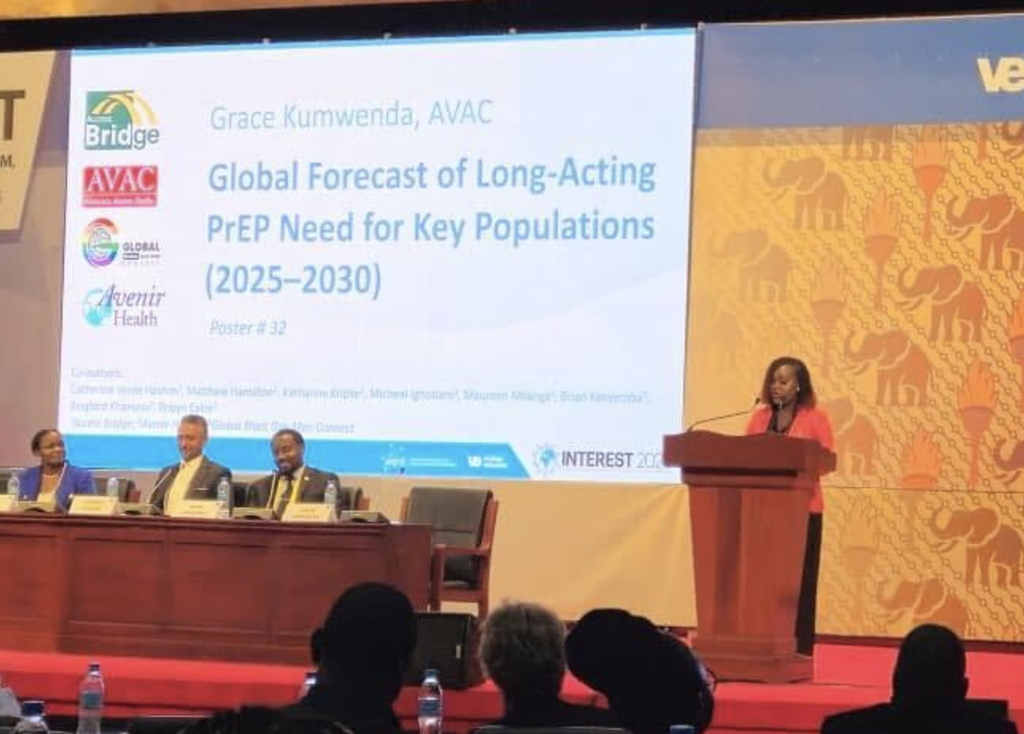
Beyond the main conference sessions, INTEREST 2026 was also an important space for AVAC, Access Bridge and partners to share advocacy priorities and field insights. AVAC presented a poster on HIV Prevention Research and Development at a Tipping Point: Insights from the 2025 People's Research Agenda Update, highlighting the need to protect and sustain HIV prevention R&D at a time of financing uncertainty. We also convened a PEP-in-Africa side meeting that brought together researchers, implementers, Ministry of Health representatives, and advocates to discuss how to improve access to today's PEP while preparing for future PEP options. Access Bridge presented two important presentations on lessons for getting PrEP rollout right this time and on forecasting long-acting PrEP need among key populations from 2025 to 2030.
Financing Will Decide Whether Innovation and Interventions Reach People
Across INTEREST, the funding crisis was a constant undercurrent. A mini-oral from South Africa described how HIV funding cuts have reduced donor-supported staffing in primary healthcare facilities, disrupting key prevention, testing, linkage, and supportive services. While core ART services remained more stable, facilities relied on task shifting, temporary staffing, and multi-month dispensing to keep services moving — at the cost of heavier workloads, slower service delivery, weaker prevention services, and reporting delays.
Dr. Seif Shekalaghe, Principal Secretary for Health in Tanzania, emphasized that in a changing global financing environment, countries must strengthen domestic resource mobilization and build local capacity. Tanzania's AIDS Trust Fund, efforts to expand healthcare access, and investment in local pharmaceutical manufacturing were highlighted as examples of steps toward self-reliance. This funding context is critical. We cannot talk honestly about new products, long-acting prevention, cure research, vaccines, or advanced therapies without also talking about who will pay, who will deliver, and how countries will sustain access.
Final Word
For us, the message from Dar es Salaam was clear: we need to build the bridge between discovery and delivery earlier and more efficiently. The INTEREST conference is powerful because it keeps these conversations relevant and reminds us that science matters, but so do systems.